


Factory Floor Repair: How We Raised a Sunken Concrete Slab 2-6" With Cement Slurry-No Demolition, Back in Operation in Two Days
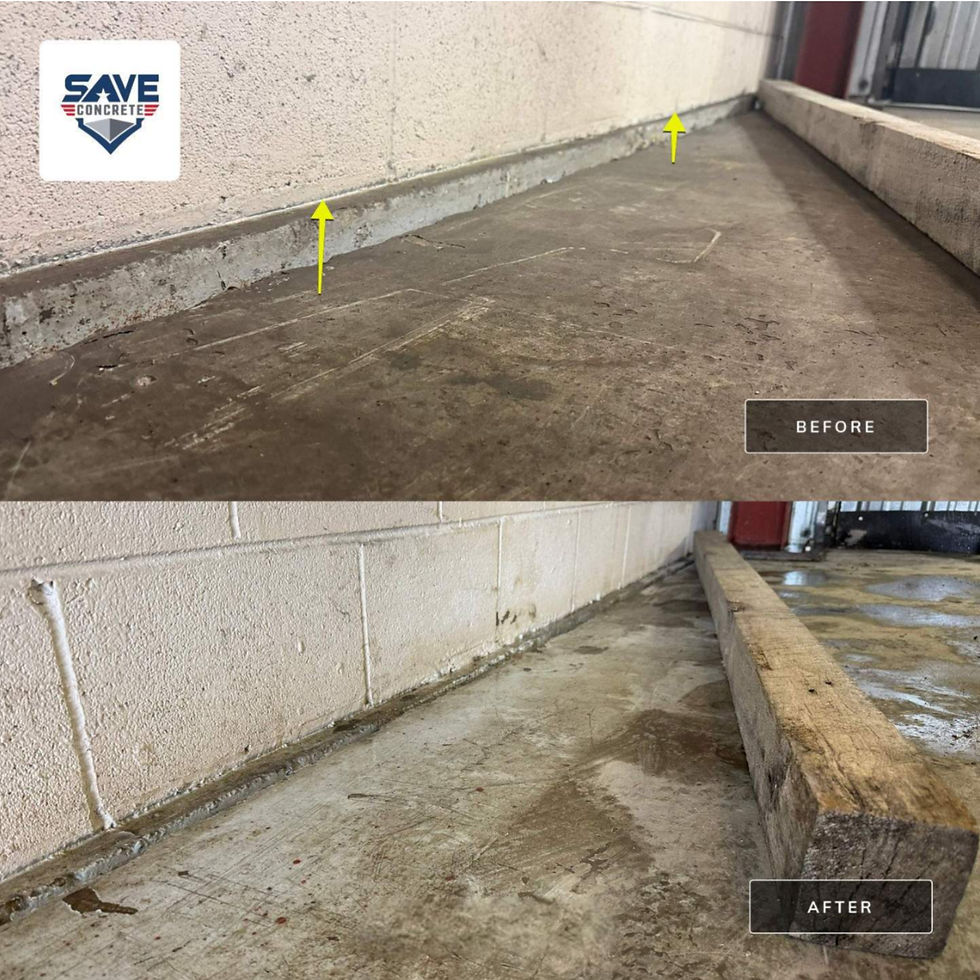
A factory floor does not have to be torn out just because it has settled. We just completed a factory floor repair at a metal fabrication plant where the concrete next to the foundation had dropped 2 to 6 inches. That kind of settlement throws machinery out of level and makes forklift traffic harder and less safe.
We raised the existing slab with calibrated cementitious slurry. There was no demolition. The plant avoided a full tear-out, saved a significant amount of downtime, and returned to operation with the job completed in two days. If you are searching for factory floor repair, industrial concrete leveling, or warehouse slab raising, this is the advantage that matters: lift the slab you already have, fill the void beneath it, and get production back on a level floor without ripping the plant apart.
Why this metal fabrication floor had to be leveled
Metal fabrication is unforgiving. Machines need a level plane. Forklifts need a predictable path. A slab that has dropped 2 to 6 inches near a foundation creates problems that show up every shift:
• Machinery sits out of level, which affects accuracy, vibration, and wear
• Forklift traffic hits a grade change that should not be there
• Loads drift toward the low side
• Joints and slab edges break down faster under wheel loads
• Water and debris collect in the low area against the foundation
Replacement would have meant demolition, haul-off, forming, pouring, curing, and a much longer shutdown. Raising the existing concrete restored the floor without demolition and delivered a significant time savings compared with replacement.
Why this metal fabrication floor had to be leveled
Metal fabrication is unforgiving. Machines need a level plane. Forklifts need a predictable path. A slab that has dropped 2 to 6 inches near a foundation creates problems that show up every shift:
• Machinery sits out of level, which affects accuracy, vibration, and wear
• Forklift traffic hits a grade change that should not be there
• Loads drift toward the low side
• Joints and slab edges break down faster under wheel loads
• Water and debris collect in the low area against the foundation
Replacement would have meant demolition, haul-off, forming, pouring, curing, and a much longer shutdown. Raising the existing concrete restored the floor without demolition and delivered a significant time savings compared with replacement.
Why factory slabs drop next to a foundation
Industrial slabs settle when the soil underneath washes out, compresses, or loses support from:

Water moving along the foundation and under the floor
Poor original compaction
Heavy point loads from machines, racks, and forklifts
Vibration from fabrication equipment
Utility trenches, abandoned ductwork, or unfilled voids
When support disappears under one edge of a slab, that edge drops. In this plant, the drop was concentrated by the foundation—2 to 6 inches. The repair had to lift the slab and fill the void so machinery and forklift traffic could run on a stable surface again.Surface patching does not do that. Only material placed under the slab restores support.
How factory floor repair with cement slurry works
SAVE Concrete is the only contractor in Illinois raising concrete with calibrated cementitious slurry mixed and delivered by our own equipment. That consistency matters on a factory floor.
The process:
Inspect the floor and foundation line, measure the drop, and plan injection points around machinery and traffic lanes.
Drill small, strategic holes through the settled slab.
Pump premium Portland cement-based slurry under pressure. It displaces trapped air, water, and loose material, fills the void, and hydraulically raises the slab.
Control the lift in stages, especially next to a foundation where the slab can bind.
Bring the floor back to grade for machinery and forklifts.
Patch the holes and, when needed, recommend joint caulking so water cannot wash out the subgrade again.
The slurry cures into a dense, concrete-like mass. It is engineered to support greater loads than typical native soil, while remaining lower density than standard concrete if future excavation is ever needed.On this project, that process was completed without tearing out the floor.
No demolition, significant time savings, return to operation in two days
This is the part plant managers care about most.
No demolition.
The existing factory slab stayed in place. We did not saw-cut the floor out, haul concrete to a landfill, form a new pour, or wait on a full replacement cure. The plant kept the floor it already had.
Significant time savings.
Full replacement takes the area out of service for days or weeks. Raising with slurry is a targeted repair. On this metal fabrication floor, the difference was the difference between a short, planned interruption and a production shutdown.
Return to operation — completed in two days.
The raising work was completed on a two-day schedule so the plant could get back to machinery use and forklift traffic without a long outage. That two-day return to operation is why industrial clients choose concrete raising over replacement when the slab is still sound.Typical use guidelines after slurry raising:
The floor can be walked on immediately, avoiding fresh patch holes
Light traffic is often possible after about 8 hours
Heavy concentrated loads are generally held until the material has had time to gain strength, which fit this project’s two-day return to operation
The exact traffic plan should always match the slab, the loads, and the plant’s schedule. On this job, the goal was clear: level the floor, skip demolition, and get the shop running again in two days.
What raising material is the better industrial choice
Factory and warehouse floors carry machines, steel, and repeated forklift traffic. The material under the slab has to stay put and carry load.
Method | What goes under the slab | Demolition required? | Typical disruption | Best fit for factory floors? |
Calibrated cement slurry (SAVE Concrete) | Portland cement-based, flowable, load-bearing grout | No | Hours to two days | Yes. Fills voids and returns the floor to service quickly |
Polyurethane foam / polyjacking | Expanding chemical foam | No | Fast lift, weaker long-term support | Weak match for heavy industrial void fill |
Traditional mudjacking | Soil, sand, or limestone mix with little cement | No | Short repair, shorter life | Temporary. Can wash out |
Full slab replacement | New concrete after tear-out | Yes | Days to weeks | Last resort only |
Why slurry won on this floor:
Load support. Slurry solidifies into a material with properties similar to poured concrete.
Complete void filling. Flowable slurry spreads under the slab instead of leaving unsupported pockets.
No demolition. The plant kept its existing floor.
Time. Replacement would have cost far more downtime. This repair was completed in two days, with a return to operation instead of a drawn-out rebuild.
Warranty. SAVE Concrete backs raising work with a 4-year no-questions-asked warranty.
Cost. Raising is generally one-third to one-half the cost of replacement.
Machinery alignment and forklift traffic after a 2–6 inch drop
A 2-inch drop is already a problem. A 4-inch drop is a production issue.
Machinery needs a flat, stable base. If the floor falls away toward the foundation, the machine is no longer sitting on the plane it was installed on. Raising the slab restores that plane instead of asking the equipment to live with a slope.
Forklifts amplify floor defects. A settled edge becomes impact loading on joints, slab corners, tires, and the truck. Leveling the slab removes the artificial grade change.
Because this repair used slurry raising instead of replacement, the plant did not have to wait on demolition, a new pour, and a long cure. The floor was raised, supported, and scheduled for a two-day return to operation.
Factory floor repair vs. replacement
Replacement is the right answer only when the slab has failed—broken apart, heaved beyond use, or too damaged to lift. If the concrete is still sound and simply out of level, raising is the better industrial repair.
Raising the existing factory floor
Requires no demolition
Fills the void that caused the drop
Costs about one-third to one-half of replacement
Avoids landfill waste from demolished concrete
Delivers significant time savings
Allowed this plant a return to operation with completion in two days
Replacing the floor
Requires demolition, haul-off, forming, and a new pour
Takes the area out of service much longer
Creates a color and joint mismatch next to remaining slabs
Still depends on the same soil unless the void is addressed
Usually carries a shorter warranty than SAVE Concrete raising
For this metal fabrication plant, the slab by the foundation had dropped. It had not failed. So we saved the concrete and saved the schedule.
What plant managers should look for before the floor gets worse
If you run a factory, warehouse, or fabrication shop in the Chicago area or Northern Illinois, watch for:
A visible drop along a foundation wall, column line, or loading area, or dip in a middle
Forklifts climbing or slapping one edge of a slab
Machines that need repeated shimming
Water or fines washing out from under a joint
Cracks that open as one side of the slab moves down
A hollow sound near the low area
A 2-inch problem becomes a 6-inch problem if water keeps removing support. The earlier the void is filled, the less downtime the plant takes—and the easier it is to complete the repair without demolition.SAVE Concrete also recommends joint and exterior caulking after raising. Sealing gaps, cracks, and control joints helps keep water from washing soil out from under the slab again.
The SAVE Concrete difference on industrial floors
We raise sidewalks and driveways every week. We also raise industrial floors, warehouse floors, garage floors, loading areas, and interior slabs.What we bring to a factory floor:
Calibrated cementitious slurry mixed by our own equipment
Controlled hydraulic lifting next to foundations and equipment
A load-bearing fill, not a lightweight foam pillar
No demolition on sound slabs
Significant time savings versus replacement
Work planned around a fast return to operation
Coverage throughout the Chicago metropolitan area and Northern Illinois
A 4-year no-questions-asked warranty
We have been raising concrete since 2004. The point of the company name is the same on a plant floor as it is on a patio: save the concrete you already paid for.
Project recap
Problem: Factory floor at a metal fabrication plant had dropped 2 to 4 inches by the foundation
Risk: Machinery out of level and uneven forklift traffic
Repair: Concrete raising with cement slurry
No demolition: The existing slab stayed in place
Schedule: Significant time savings versus replacement, with completion in two days and a return to operation
Result: Slab lifted back to grade, voids filled, floor put back into service
That is factory floor repair done the SAVE Concrete way.
FAQ: Factory floor repair and industrial concrete raising
Can you raise a factory floor that has dropped 2 to 6 inches?
Yes, if the slab is still intact. A 2- to 6-inch drop next to a foundation is a common industrial settlement range and is often a strong candidate for slurry raising.
Do you have to demolish the floor first?
No. If the slab is sound, SAVE Concrete raises and supports the existing concrete. This project required no demolition.
How fast can a plant return to operation?
That depends on the area and the loads, but this factory floor repair was completed in two days, giving the plant a much faster return to operation than replacement.
Is cement slurry strong enough for machinery and forklifts?
Yes. SAVE Concrete uses a high-cement, Portland cement-based slurry that fills voids and cures into a stable, load-bearing subgrade.
Why not just replace the slab?
Replacement costs more, requires demolition, and takes the floor out of service much longer. Raising saved this plant both the tear-out and a significant amount of downtime.
Why not use foam under an industrial slab?
Foam can lift a slab, but it does not create the same dense, concrete-like support. SAVE Concrete uses calibrated cement slurry because it fills the void and remains a mineral, load-bearing material under heavy traffic.
Ready to level a factory or warehouse floor without tearing it out?
If your plant floor has settled along a foundation, under a machine, or in a forklift lane, do not assume demolition is required. If the slab is sound, we can often raise it, fill the void, and return the area to operation far faster than replacement. This metal fabrication floor was completed in two days.Call SAVE Concrete for a free no-obligation on-site evaluation: 847-336-3400 Or request a quote at saveconcrete.com/contact-us

No demolition. Significant time savings. Raise the floor and get the plant moving again.


Comments